Config-driven exposure insight for cybersecurity operations
Help your cybersecurity operations teams act sooner and investigate faster with near real-time, config-driven exposure insight. Find and fix drift, segmentation gaps, and exploitable attack paths quickly.

Clarity and control for high-pressure environments
Your cybersecurity operations team needs to filter noise, read incomplete signals, and defend systems in a fast-changing environment.
Yet many of the weaknesses that shape true exposure remain invisible to detection tools. Configuration drift, dormant access routes, segmentation gaps, and misconfigurations silently alter how attackers can move.
To stay ahead, your team needs more than alert streams. You need clear, reliable insight into the conditions driving exposure. This helps you cut noise, decide faster, and focus experts where they matter most.
Sharpen focus and impact in cybersecurity operations with Nipper OmniSight (Continuous)
Gain a near real-time understanding of where genuine exposure is forming and why it matters. Continuous insight improves signal quality, accelerates investigation, and strengthens preventive action across complex environments.
Continuous exposure-led intelligence
Continuous, configuration-driven visibility, showing where misconfigurations create exploitable attack paths.
Near real-time drift and change detection
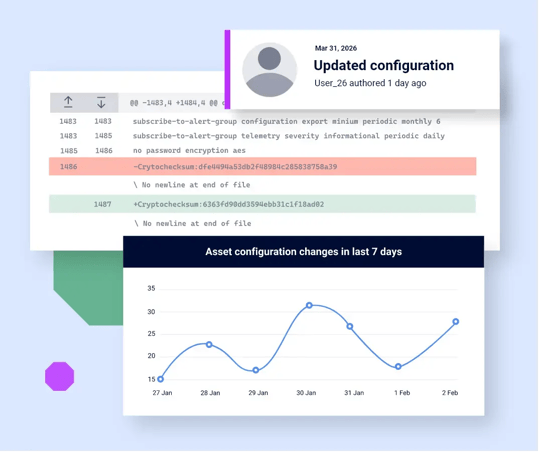
Identifies configuration changes as they occur, including intentional, accidental, or malicious updates that introduce new exposure across hybrid and segmented environments.
Attack-surface aware prioritization
Correlates device-level issues into end-to-end attack paths. This helps your teams focus on exposures with the greatest real-world impact.
Clearer security operations center (SOC) signal quality
Validates which alerts map to genuine configuration-driven exposure, reducing false positives and alert fatigue in the SOC.
Strengthened Zero Trust & segmentation assurance
Continuously verifies segmentation controls and trust boundaries. This reveals unintended routes and policy failures before adversaries exploit them.
Historical context for faster investigations
A full configuration history enables rapid root-cause analysis. It also supports indicators of compromise (IOC) correlation and helps you recover to the last known secure baseline.
From alert overload to exposure driven cyber operations

Focus on real exposure, not alert noise
Many security alerts do not represent real, exploitable risk. Nipper OmniSight confirms which alerts map to genuine configuration-driven exposure by showing how misconfigurations, segmentation gaps, and trust boundary failures create attack paths. This helps teams filter noise and focus on issues that increase attacker movement or impact radius – reducing alert fatigue and improving SOC prioritization.
Investigate faster with configuration context
When incidents occur, missing configuration context slows investigation and response. Nipper OmniSight links alerts and indicators to configuration history, drift events, and attack-path changes. CyberOps teams can see what changed, when it changed, and how it altered exposure. This shortens root-cause investigation, improves handover between teams, and supports faster, more confident containment decisions.


Prevent escalation through early exposure insight
Most cyber incidents escalate because underlying exposure goes unnoticed. Nipper OmniSight provides near real‑time insight into emerging attack paths caused by drift, weak controls, or segmentation failures.
This helps you act before attackers exploit weaknesses. It supports proactive exposure reduction and stronger Zero Trust assurance. It also shows measurable progress across continuous threat exposure management cycles.
Turn exposure insight into faster decisions and measurable outcomes
Near real-time, config-driven exposure insight helps cybersecurity operations leaders make faster, more consistent decisions. It provides a shared basis for prioritization, accountability, and repeatable improvement – reducing escalation and demonstrating progress over time.
Decision speed
Shorten time-to-triage and time-to-decision by giving teams clear, shared exposure context, not competing interpretations.
Consistency at scale
Standardize how exposure is assessed across teams, shifts, and regions. This reduces variability and improves operational resilience.
Accountable prioritization
Align remediation work to agreed criteria (reachability, business impact, and control effectiveness) so priorities are defensible and auditable.
Cross-team execution
Improve handoffs between cybersecurity operations, infrastructure, and network teams with clear evidence and ownership - reducing churn and rework.
Measurable improvement
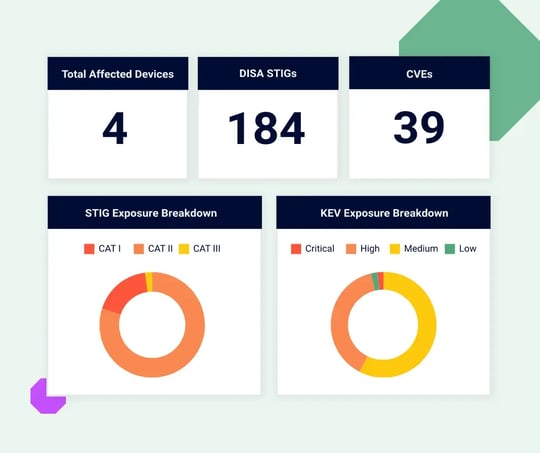
Track exposure reduction over time and report progress in clear terms for stakeholders. This supports CTEM governance and steady improvement in exposure reduction.
Enrich cybersecurity operations by integrating exposure intelligence everywhere
Nipper OmniSight (Integrated) strengthens existing cybersecurity operations workflows by enriching SIEM, SOAR, CMDB, asset, and monitoring platforms with configuration-validated exposure insight. It improves triage, investigation, and preventive action.
Detection and investigations enriched with configuration-validated exposure context
Nipper OmniSight feeds configuration-derived exposure insight into Elastic to support security detection and investigation workflows. Your teams can correlate alerts and telemetry with misconfigurations, segmentation gaps, and drift that create real attack paths.
This helps your analysts confirm which signals show real exposure. It also helps them prioritize work based on impact. They can respond with clear, evidence-based context. This improves detection accuracy, investigation speed, and preventive action across cybersecurity operations workflows.
Threat investigations enriched with configuration-validated exposure context
Nipper OmniSight feeds configuration-derived exposure insight into Splunk to support security investigation and incident response workflows. Your teams can connect alerts and indicators to misconfigurations, segmentation gaps, and drift that create attack paths.
Your analysts can confirm what is exploitable and see how exposure was formed. They can also support reviews with clear, configuration-based evidence. The result is faster triage, more confident containment, and fewer repeat issues.
Security workflows grounded in configuration-validated evidence
Nipper OmniSight (Continuous) enriches ServiceNow workflows with validated configuration states, drift insights, and exposure relevant metadata. CyberOps teams can link incidents, investigations, and remediation tasks to the configuration conditions that created real risk.
This gives security teams trusted evidence to support triage, remediation tracking, and post-incident reviews. It reduces manual validation work and improves coordination across CyberOps, SecOps, and infrastructure teams.
Expose active devices involved in real attack paths
Combining Forescout’s device visibility with Nipper OmniSight allows CyberOps teams to link active devices to configuration-driven exposure. Forescout surfaces device presence and behavior, and you can correlate them with the identified misconfigurations, drift, and segmentation weaknesses.
This gives security teams a clearer view of which devices are part of real attack paths. It helps them prioritize investigations, focus containment efforts, and reduce uncertainty in complex IT/OT and segmented environments.
Prevent exposure by validating security intent before deployment
Nipper OmniSight integrates with Git repositories to assess stored or proposed network configurations for security-relevant risk. CyberOps teams can identify misconfigurations, overly permissive rules, and segmentation weaknesses before anyone introduces them into the live environment.
This helps security teams stop new attack paths during routine changes. It also enforces least-privilege access earlier in the lifecycle and reduces reliance on downstream detection and response.
Talk to a specialist
Speak with a specialist to explore how Nipper OmniSight (Continuous) can support your cybersecurity operations team. Learn how configuration‑driven exposure insight can reduce noise, accelerate investigations, and help teams act before issues escalate into incidents.
Built for cybersecurity operations leaders and technical recommenders, with support for SOC workflows and security architecture needs.
Resources for CyberOps teams
Frequently asked questions
Understand how cybersecurity operations teams use ongoing configuration insights to:
-
Reduce noise
-
Speed up investigations
-
Assure segmentation
-
Stay ahead of attackers
-
By confirming which alerts are real, exploitable weaknesses, cybersecurity operations teams focus on what matters, not the noise.
-
It shifts operations from reactive alert handling to proactive exposure reduction, enabling consistent progress across CTEM cycles.
-
Teams get regularly updated views of attack paths, key exposure points, drift, and segmentation gaps. This helps them triage faster and act earlier.
-
It shows how misconfigurations and trust boundary issues create full attack paths. It gives cybersecurity operations teams early insight into where attackers can move.
-
Because many exploitable pathways originate from misconfigurations rather than software flaws. Continuous visibility helps teams find these weaknesses before adversaries exploit them.