

Latest blogs




For years, the essential questions around cyber incidents could be reduced to quantities. How many hours before we’re back online? How much data has been stolen? How large is the ransom?
Even the most serious breaches were typically seen as one-off events that could be reduced to balance sheet terms: expensive and disruptive, certainly, but ready to be written off or down, and learned from.
But in an era of AI-enabled attacks, it’s no longer possible to reduce the impact to numerical terms. Instead, there’s a far more fundamental issue: can the business actually survive an attack? And even if it does, can its partners and suppliers survive too?
The ripple effect
When iconic British automaker Jaguar Land Rover (JLR) suffered a major cyber attack last year, production halted across its UK factories. That created an instant ripple effect across its global distribution and supply chain. Systems were offline for weeks, affecting thousands of its workers and those in countless other businesses.
It wasn’t only JLR that took the hit: many of its suppliers experienced significant losses too.
The reality is that in today’s highly automated supply chains, if the main buyer’s systems go offline, everyone in that ecosystem feels the ripples. For smaller businesses, this can be decimate cashflows, force shutdowns and create logistics nightmares.
In the worst-case scenario, specialist suppliers could be pushed towards insolvency… creating further challenges for the global brand once its systems are back online.

Cyber risk is now corporate risk
In short, cyber risk can no longer be conceived of as an isolated technical failure or a contained financial and reputational loss. Instead, it’s a source of prolonged, widespread disruption, damaging profitability, reputation and confidence to the extent that it could even bring companies down; if not the one directly attacked, then those that enable it to operate effectively.
In such circumstances, the overall accountability for security is no longer left as an IT issue: instead, it becomes a prime concern for the leadership structures that set priorities, allocate investment, and accept risk.
The regulatory response: proactive protection
The fact that consequences may be felt across industries, supply chains, and even national economies has also sparked government interest. With debilitating large-scale attacks no longer just a possibility but a probability, governments and regulators have had to rethink their approach, in the interests of macro-economic stability and the protection of essential services and Critical National Infrastructure.
They are moving away from compliance requirements based on reacting to threats as they emerge, to focus on mandating proactive monitoring, preventative readiness and the ability to contain disruption before it cascades.
How AI is changing the threat landscape
The central factor driving this changing threat landscape is artificial intelligence (AI). While as yet there is no evidence that AI has produced entirely new attack techniques, it has dramatically accelerated existing ones, by automating reconnaissance, exploitation, and lateral movement to high-value targets.
The result: the window to detect and contain intrusions has shrunk from days to a matter of minutes. As soon as the perimeter is breached, critical systems and data could be vulnerable.
The need for Zero Trust approaches
This shift demands a move beyond detection towards pre-emptive security: ensuring that access to critical systems is tightly governed, changes are tested and visible, impacts are understood in advance, and crucially, that critical systems can be isolated, so disruption does not become catastrophic.
Evolving regulations are often an extension of the Zero Trust model already taking hold in defense and critical infrastructure sectors, where organizations are expected to prove their readiness, rather than just assume it.
Compliance and complacency: where AI can breach
This is a welcome development, challenging the pervasive complacency associated with periodic audits and “continuous monitoring”, which all too often means little more than simply watching the screens for intrusion alerts. While these met past compliance standards, they are insufficient against AI-enabled attacks.
The ability to probe on multiple fronts means that, armed with AI tools, adversaries can readily find basic weaknesses: unchanged default configurations, control gaps, inadequate segmentation, inconsistent application of least-privilege access, configuration drift created inadvertently through routine changes. And AI can then help them expose them just as quickly, uncovering attack paths to business-critical systems.
Crucially, these are rarely the most direct route to a target; just the most exposed.
Retiring “Threat Debt”
This makes “threat debt” critical. The small misconfigurations and vulnerabilities accumulated over time create access paths for attackers.
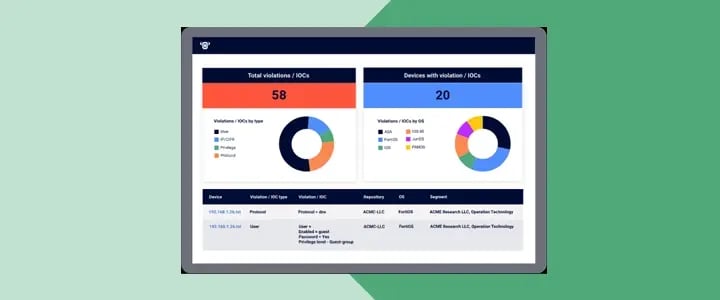
Addressing these requires a shift away from reactive firefighting toward systematic exposure management. It means focusing less on individual alerts, instead pinpointing and resolving the small number of gaps that open up multiple exploitable attack paths. Done well, this approach not only reduces current risk but limits the impact of future threats, long before they materialize.
Another vital focus is effective segmentation, that minimizes access to essential systems and data. Policies need to be backed by effective controls that are consistently enforced. It only takes one device to have been forgotten when access polices are updated for segmentation to be compromised.
Focusing on recovery
These measures improve readiness and resilience, reducing both the likelihood and impact of breaches.
But to avoid the kind of repercussions that even a few days of downtime can generate, organizations also need to focus on a third “R”: recoverability. What’s the fastest route to enable systems to be fully and securely operational again? A common barrier to this is that many businesses still don’t document their network accurately and comprehensively. This means that a restore from backups may inadvertently omit devices – leaving them vulnerable still.
A CMDB-centric approach
At Titania, our answer to this challenge is based around maintaining an up-to-date configuration management database (CMDB), where the details of all devices are stored. Our enterprise-level solutions actively collect these configurations into the CMDB and can then monitor for every change: confirming planned changes have been made correctly, alerting teams to unplanned changes and updating the CMDB to reflect the latest status.
This then means that even if the preventative measures fail, the duration of any downtime can still be minimized and the impact on the wider supply chain reduced.
Readiness, resilience and recoverability
Cybersecurity is no longer a back-office concern. It is now a defining measure of organizational maturity and leadership accountability. The question facing boards and executives is no longer whether an attack will happen, but whether they have taken steps to ensure that it doesn’t affect their partners and suppliers.
Proactively addressing risks and exposure paths at all levels is the most effective way to survive AI-driven attacks; building readiness to reduce the likelihood of a successful incursion, increasing resilience to minimize the damage that can be caused and accelerating recovery from any downtime.
See how Nipper OmniSight supports exposure management, attack path mapping, Zero Trust segmentation validation, and compliance automation for your team.
